Smile: A Handwritten Font for Authentic, Approachable Design
The Warmth of a Handwritten Note
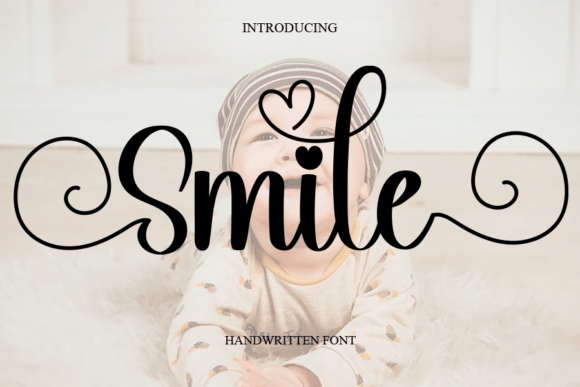
In a digital landscape often dominated by sharp edges and sterile precision, there's a growing appetite for authenticity. We crave the human touch, the slight imperfection that signals real connection. This is where the Smile font finds its purpose. It's a simple, clean handwritten font that captures the essence of casual, friendly communication without sacrificing legibility or professionalism. Think of it as the typographic equivalent of a warm, confident handshake—it's approachable, genuine, and immediately puts your audience at ease.
Visually, Smile strikes a careful balance. It's not a dramatic, sprawling script that demands all the attention. Instead, its characters are well-formed, with a natural flow that mimics the rhythm of real handwriting. The letterforms are consistent enough to maintain readability in shorter paragraphs and headlines, yet they retain enough organic variation to avoid looking mechanical. This versatility is its core strength. It functions brilliantly as a display font for headings where you want to inject personality, but it can also be used sparingly in body text for quotes or callouts to break up monotony and add a personal accent.
Where Smile Truly Shines: Practical Applications
The real value of a creative font like Smile is measured by how it performs in real projects. Its simple, natural feel makes it a surprisingly adaptable asset across numerous contexts.
- Branding & Logo Design: For small businesses, boutiques, cafes, or artisanal brands, Smile can form the foundation of a brand identity that feels personal and trustworthy. It works beautifully for logos, business cards, and packaging where the goal is to communicate handmade quality or personal service. Pair it with a clean sans serif font for body copy to create a balanced and modern font pairing.
- Marketing & Social Media: On platforms like Instagram or Pinterest, where authenticity drives engagement, Smile excels in social media graphics. Use it for quotes, promotional overlays, or story text to create a friendly, conversational tone that feels native to the medium. It's also effective in email headers or digital ads where you want to stand out from the rigid geometry of standard web fonts.
- Publishing & Editorial Design: In editorial design, Smile can be a secret weapon. It's perfect for pull quotes, chapter titles in lifestyle magazines, or subheadings in blogs about food, travel, or personal development. It adds a layer of personality and breaks the visual grid in a way that draws the reader's eye. For book covers, especially in the romance, young adult, or memoir genres, it can instantly signal the tone of the content.
- Web & Digital Design: Used thoughtfully in web design, Smile can humanize a digital experience. Consider it for a website's hero section headline, a "Meet the Team" page, or a testimonial slider. Its handwritten style makes user-generated content or personal messages feel more authentic. As a premium font, it often includes optimized web font formats for faster loading and smoother rendering.
- Packaging & Print: From greeting cards and invitations to product labels and thank-you notes, Smile brings a tactile, personal quality to print. It's ideal for any project where the end result is held in the hand, reinforcing the idea of care and attention to detail.
Integrating Smile Into Your Workflow
Choosing the right font is just the first step. Using it effectively requires a bit of strategy. Here’s how to think about integrating Smile into your projects.
First, evaluate the project's tone. Smile communicates friendliness, approachability, and creativity. It's less suited for projects requiring extreme formality, corporate authority, or technological futurism. If your brand voice is warm, personal, or playful, it's likely a good fit. Next, always test it in context. Don't just look at it in a font preview. Place it into your actual layout—your website mockup, your brochure draft, your social media template. How does it interact with your other design assets? Does it maintain its clarity at the sizes you'll use it?
Speaking of clarity, readability is paramount. While Smile is legible for its style, it's still a handwritten font. Avoid using it for long blocks of small text, especially on screen. Its strength is in headlines, short phrases, and accents. For body text, pair it with a highly legible serif font or sans serif font. A common and effective pairing is a handwritten font like Smile for display with a geometric sans serif (like Futura or Montserrat) or a humanist serif (like Georgia or Merriweather) for body copy. This creates a clear visual hierarchy and ensures your message is both seen and read.
Finally, understand the licensing. If you're using Smile for a client project or a commercial product, ensure you have the appropriate commercial font license. Most premium fonts come with clear licensing terms for desktop, web, and app use. Respecting these terms is part of professional practice and supports the type designers who create these valuable tools.
Beyond the Font: Building a Visual Language
Ultimately, Smile is more than just a typeface; it's a component in building a coherent visual language. When used consistently, it becomes a recognizable part of your brand's personality. Over time, your audience will associate that friendly, handwritten style with your message. This consistency builds recognition and trust.
Think about pairing it with other elements that reinforce its character. Soft, natural color palettes, organic textures in photography, and a conversational tone in your copywriting all work in harmony with Smile to create a unified experience. It’s about creating a feeling—a sense of approachability and authenticity that resonates in an age of digital noise.
So, whether you're designing a logo for a new startup, crafting a social media campaign, laying out a magazine feature, or personalizing your wedding invitations, consider the power of a simple, well-crafted script font like Smile. It doesn't shout; it speaks directly, adding a layer of human connection that can make your work not only more beautiful but more effective. In the end, the best design often feels less like it was designed and more like it was discovered—and Smile has a knack for creating that feeling.